Flea treatment in Nijmegen: how you can tell
Fleas are small, dark-brown insects that can jump a long way. You rarely see one for long, as it quickly disappears into fur or a rug. These signs point to fleas:
- itchy bites, often in clusters around the ankles and lower legs
- a dog or cat that scratches, licks or nibbles its coat far more than usual
- black specks in the coat or basket that turn reddish-brown on a damp tissue
- jumping dots on a light floor, the sofa or white socks
Those black specks are flea dirt: dried blood. The damp tissue test is a simple way to be sure you are dealing with fleas and not just ordinary dirt from the garden.
Why fleas are so persistent
The adult flea lives on the animal, but that is only a small part of the problem. Fleas lay eggs in the coat that soon drop out: into the basket, onto the sofa, between the boards of a wooden floor. There they hatch into larvae that hide in cracks and carpets.
The larvae then pupate inside a protective cocoon. At that stage they are hard to reach and can wait a long time for a host to pass by. Vibration and warmth, from footsteps or a vacuum cleaner for instance, make them hatch. That is why you may still see fleas for a while after a treatment. It does not mean it has failed; it means the last pupae are hatching and then come into contact with the product.
Our flea treatment in the home
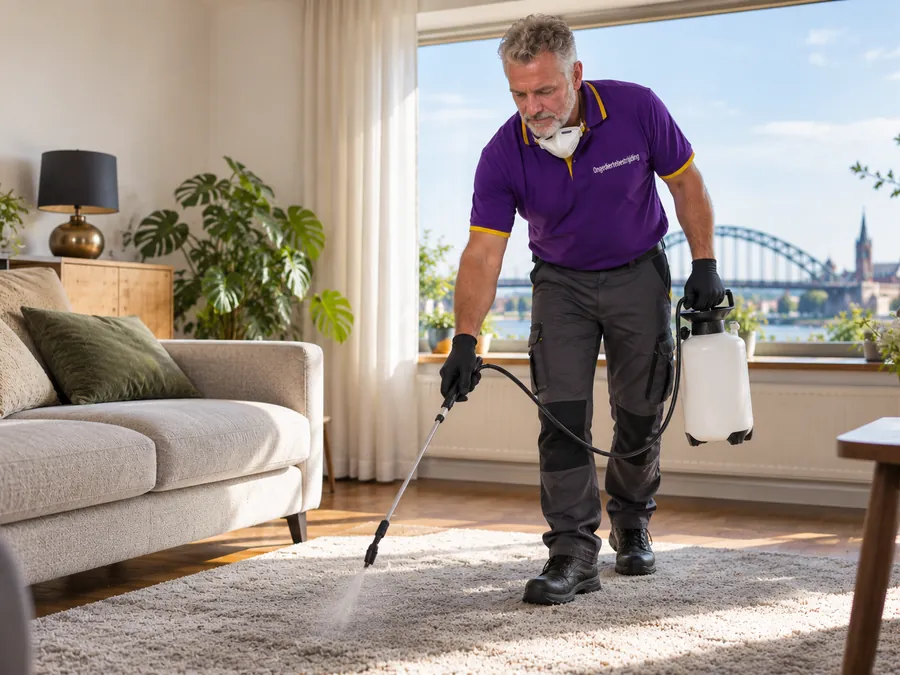
During the inspection we look at where your pet sleeps, lies and walks. Those spots are the core of the treatment. We adapt the approach to the floor: carpet, laminate with joints or an old wooden floor with gaps each need something different.
Just before the treatment, we ask you to vacuum thoroughly. A certified pest controller then treats floors, skirting boards, cracks and upholstered furniture with a suitable product. You get clear instructions on airing the room, vacuuming and when children and pets may go back in. A second round follows if needed. You can see how we tackle other insects on our page about pest control in Nijmegen.
What you can do yourself
Have all your pets treated at the same time through the vet, including any animal that seems fine. Never use a dog flea product on a cat; some of those products are toxic to cats. Wash baskets, blankets and cushions your pet lies on at a high temperature.
Vacuum daily over the following weeks, including under the sofa, along the skirting boards and in the car if the dog travels in it. Empty the vacuum cleaner straight into the outside bin. Flea bombs and shop-bought sprays may seem convenient, but they barely reach the pupae in cracks and carpets and often give a false sense of security.
Fleas without a pet in the house
You can get fleas even without a dog or cat. After moving house, they sometimes come from a property where a previous occupant kept a pet: the pupae wait in the floor until someone walks in again. A bird's nest under the roof tiles or in the gutter can bring bird fleas, and a neighbour's cat can carry fleas into your garden.
If you are mainly bitten at night in bed and see no jumping dots, something else may be going on. Have a look at our page on bed bug treatment, or let us identify which insect is biting you during the inspection. There is little point treating for fleas if another insect is to blame.